Beyond the Hype: Practical AI Integration for Business Process Optimization in 2026
Imagine leading a mid-market company juggling tight margins, unpredictable supply chains, and constant pressure to modernize operations. Everyone is talking about AI. Vendors promise automation, analytics, and intelligent agents that transform productivity overnight. Yet for many organizations, turning that promise into measurable business value still feels frustratingly out of reach.
The reality in 2026 is clear. AI is no longer a novelty. The competitive advantage is not whether a company uses AI, but whether it can operationalize AI inside the processes that drive margin, cycle time, and customer experience.
The 2026 Reality Check: AI Adoption Is Rising, but Execution Is Uneven
AI adoption continues to accelerate across organizations of every size. However, adoption does not automatically lead to true AI integration for business processes. Many organizations remain stuck running pilot programs or isolated AI tools without redesigning workflows.
The Shift From Strategy to Process Optimization
Earlier phases of AI adoption focused on experimentation and vendor selection. In 2026 the focus has shifted toward workflow optimization, operational automation, and measurable outcomes.
Where AI ROI Actually Comes From
AI investments produce the greatest value when they improve clearly defined workflows such as data processing, customer service automation, financial processing, and inventory forecasting.
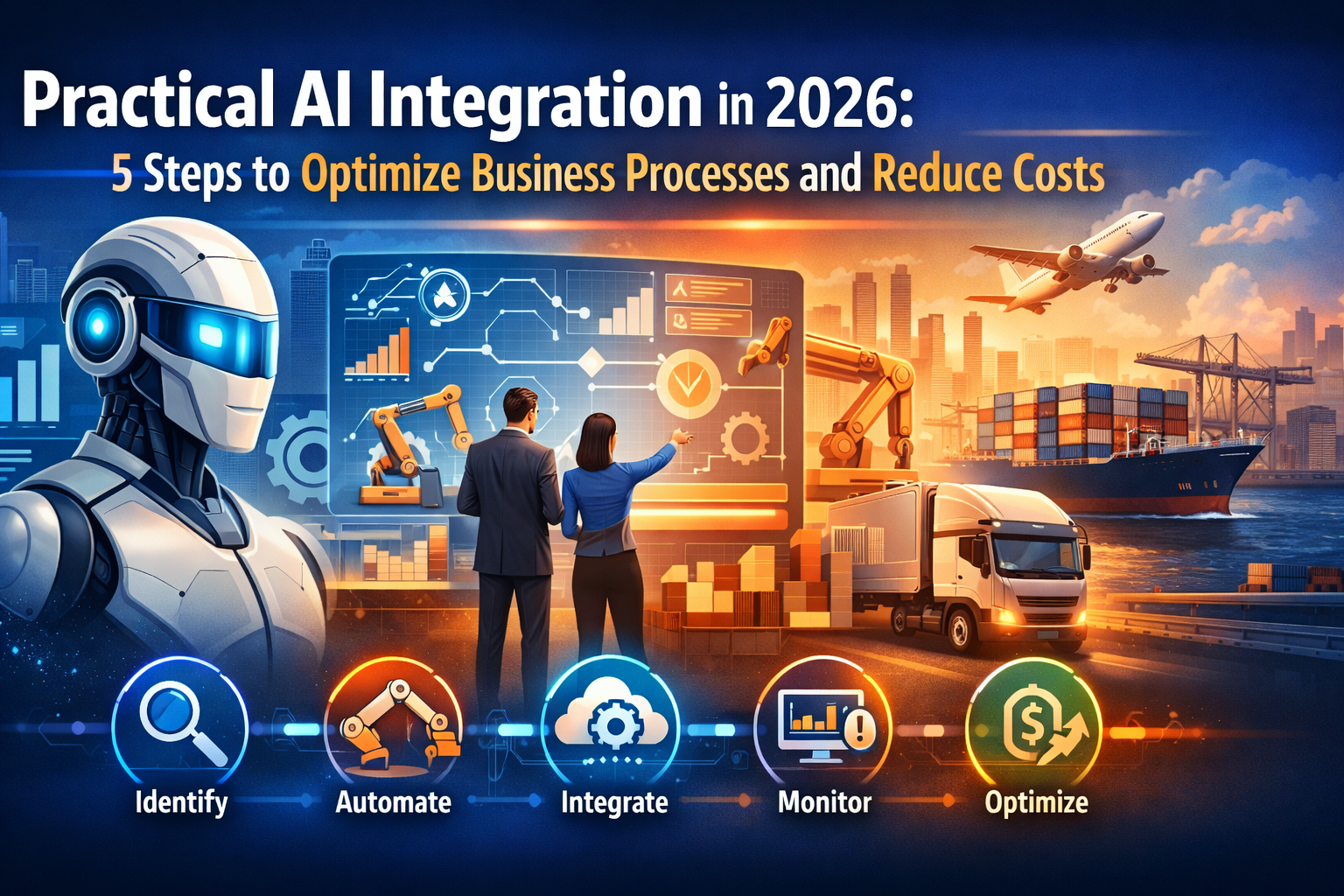
A Practical AI Implementation Roadmap
Step 1: Select High Value Workflows
Focus on three to five workflows that generate measurable impact.
Step 2: Map the Process
Define triggers, inputs, AI actions, and escalation paths.
Step 3: Integrate AI With Core Systems
Connect AI workflows to ERP, CRM, and operational systems.
Step 4: Implement Governance
Track AI systems, manage risk, and monitor usage.
Step 5: Measure Outcomes
Track cycle time, cost per transaction, and productivity improvements.
Example: AI Supply Chain Optimization
AI can analyze sales data, inventory levels, and supplier lead times to generate reorder recommendations and automate procurement workflows.
Why Fractional AI Leadership Is Emerging
Many mid market companies cannot justify a full time AI executive. Fractional AI consulting provides strategic expertise without long term overhead.
Moving Beyond the AI Hype
Organizations that focus on workflow automation, integration, and operational metrics are the ones achieving real business impact from AI.